
People Who Shaped Me
Complicated Relationships
The Woman on the Ferry
This week, we’re thinking about complicated relationships—people who were both difficult and important, who taught us through conflict or tension, who we had mixed feelings about but who shaped us nonetheless.
Not all the people who matter to us are easy to love. Some challenge us. Some frustrate us. Some hurt us even as they teach us. Some we’re grateful for and angry at in the same breath.
These are the difficult bosses who pushed us to grow. The friends who disappointed us but taught us about boundaries. The family members who loved us imperfectly. The people who were in our lives briefly but intensely, who forced us to see ourselves or the world differently. The relationships that were messy and complicated, but that we couldn’t just dismiss because something important was happening there.
Complicated relationships teach us things simple ones can’t. They teach us about our own capacity for patience, for forgiveness, for setting boundaries. They teach us that people are rarely as simple as their behaviour. They teach us to look beneath the surface, to wonder what someone is carrying that we can’t see.
Who was both difficult and important in your life? What did you learn from the tension, the conflict, the complexity? How did you make sense of a relationship that wasn’t simple?
The Woman on the Ferry
Tour managing is like keeping spinning plates going while juggling flaming batons. You’re responsible for logistics, commentary, coordinating guides, arranging reservations, managing weather and road diversions, and most importantly, managing guest expectations. It’s challenging work, and sometimes the biggest challenge isn’t the weather or the traffic—it’s the people.
I once had a guest who was miserable. From the moment she joined the group, she had nothing but complaints. She was negative about everything. The hotel was too cold. The food was too hot. The bus was too crowded. The sites were too boring. Nothing pleased her.
I did my best to accommodate her, but I had to remember that I had other guests with needs just as important as hers. And by the third day, I noticed something troubling: the other guests were beginning to shun her and her husband. No one wanted to eat with them or sit near them on the bus. While no one complained to me directly, I could feel the shift in the group’s energy. If I couldn’t turn this around, the trip would be spoiled for everyone.
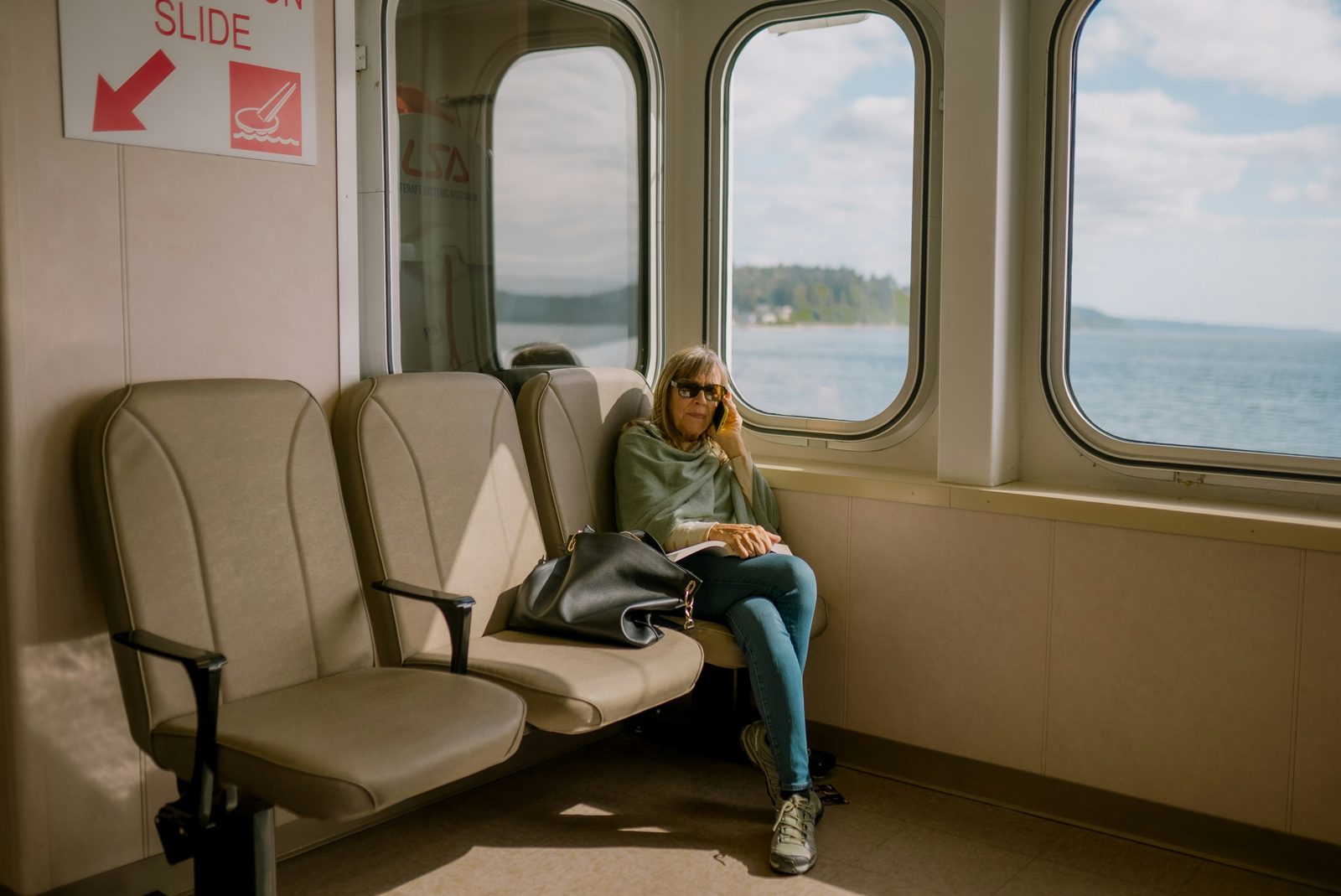
The next day, we had to take a ferry. There are several lounges and a cafeteria on ferries, so guests usually scatter—grabbing refreshments, finding seats with good views of the crossing. I wandered around the ship checking in with people, and as I rounded the corner of one lounge, there she was.
Sitting alone. Back against the wall. Her husband nowhere to be seen.
I walked right up to her and said, “Whew! What a day! I’m going to put my bum down right here.”
She made a face but wiggled over a bit to make room.
“So,” I said, settling in beside her, “what do you do when you’re not on vacation?”
She paused, then began to tell me that she was a retired math teacher and that she spent two days a week tutoring disadvantaged children.
“That’s fantastic!” I said, and I meant it.
I told her that I’d always had problems with math until I had a teacher who took the time to explain things in a way I could understand. I told her she probably didn’t know how much her kindness and generosity made a difference in the lives of those kids. I thanked her and told her I wished I’d had a teacher like her when I was a girl.
She shifted in her seat. And she smiled.
Then she started telling me about her other trips. I asked her how she handled laundry on long tours—I often have back-to-back trips, and it’s always a challenge. She reached into her purse and pulled out a packet of detergent sheets. I’d never seen these before and marvelled at what a good idea they were for travellers.
We chatted like that—just two women swapping travel tips and teaching stories—until it was time to disembark.
Later that day, I noticed a change in her demeanour. She was still herself, but something had softened. By the end of the tour, she and her husband were being sought out by the other guests, with several insisting they come to dinner with them.
I never did figure out what was bothering her. I don’t know if she was anxious about travelling, grieving something, dealing with pain I couldn’t see. But what I realized is this: we never know what someone is going through. And sometimes, people who are being difficult aren’t trying to ruin things for everyone else—they’re just struggling, and they need someone to see them. To hear them. To sit down beside them and ask a simple question.
I think about that woman on the ferry often when I encounter someone who’s being difficult. It’s easy to write people off as complainers, as negative, as ruining things for everyone else. It’s harder to sit down beside them and ask, “What do you do when you’re not on vacation?”
That woman wasn’t trying to be difficult. She was isolated. She was probably scared or uncomfortable or dealing with something I couldn’t see. And when I sat beside her—not to manage her or fix her or convince her to be more positive, but just to be with her—everything changed.
Not immediately. Not dramatically. But enough.
She taught me something important about complicated relationships: that sometimes the most difficult people are the ones who most need to be seen. That a few minutes of genuine attention—not trying to change someone, just being curious about who they are—can shift everything. That beneath the complaints and the negativity, there’s usually a person who tutors disadvantaged children, who has clever solutions for travel problems, who just needs someone to sit down and talk to them like they matter.
I was responsible for that tour—for all those guests, not just the easy ones. And I learned that sometimes responsibility means sitting down beside the person everyone else is avoiding and asking them about their life. Not because it’s my job to fix them, but because it’s my job to see them.
That’s what complicated relationships teach us: that people are rarely as simple as their behaviour. That difficulty often masks pain or fear or loneliness. That sometimes the person ruining everyone’s trip is the person who most needs someone to ask them a kind question and actually listen to the answer.
The woman on the ferry was difficult and important. She was difficult because she was struggling. She was important because she taught me that everyone—even the complainers, even the negative ones, even the people everyone else is avoiding—deserves to be seen as fully human.
Sometimes all it takes is sitting down beside them and saying, “I’m going to put my bum down right here.”
This Week’s Prompts: Complicated Relationships
Someone who was both difficult and important. Think about a person who challenged you, frustrated you, or was hard to love, but who also taught you something or mattered to you in ways you couldn’t dismiss. What made them difficult? Why did they matter anyway?
What you learned from conflict or tension. Has a difficult relationship taught you something you couldn’t have learned any other way? About patience, boundaries, forgiveness, yourself? What did the difficulty teach you?
Someone you had mixed feelings about. Who in your life did you love and resent, admire and struggle with, appreciate and find exhausting? How did you make sense of having contradictory feelings about the same person?
Looking beneath the surface. When did you discover that someone’s difficult behaviour was masking something else—pain, fear, grief, struggle? How did that discovery change how you saw them?
Grateful and angry in the same breath. Is there someone you’re both thankful for and hurt by? Someone who gave you something important but also caused harm? How do you hold both truths at once?
Invitation to Engage
Over the past two weeks, we’ve been sharing stories about the people who shaped us—unexpected teachers like Bill who taught me about loss and longing, and believers like Mrs. Charbonneau who saw my potential before I did.
This week, we’re thinking about complicated relationships. Not everyone who matters to us is easy to love. Some people teach us through difficulty, through conflict, through the tension of trying to understand them or navigate our relationship with them.
I learned from a difficult guest on a ferry that sometimes the most challenging people are the ones who most need to be seen. That sitting down beside someone and being genuinely curious about who they are can shift everything.
Who was complicated and important in your life? What did you learn from the difficulty?
This can be a tender topic. Not all complicated relationships resolve neatly. Some still hurt. That’s okay. Share what you’re comfortable sharing, or write privately about the people who were both difficult and important.
We’re here. We’re listening. We know that relationships are rarely simple.
First published in The Story Harvesters newsletter on Substack, January 19, 2026.
Comments were part of the original newsletter and aren’t included in this archive.