
Identity and Becoming
Discovering Who You Actually Are
The Shop
Last week I wrote about a guidance counsellor who told me science was too difficult for girls like me, and I expected — sitting down to write it — that I’d feel angry.
I didn’t, much. What surprised me was the list.
Welder-fitter. Semi driver. Programmer. Crisis worker. Tour manager. I’d typed it out the way you’d rattle off a résumé, and then I looked at it again and thought: nobody gave me permission for a single one of those. No counsellor sat me down and suggested welding. Nobody said you know what would suit you? Hauling a rig across Ontario.
I just went and found out.
That’s the thing about being told who you are. It arrives with a desk and a file folder and a certain tone of voice, and it feels like information. But it isn’t. It’s an opinion. And opinions can’t be tested.
The things I found out about myself, I found out the other way. By doing something and watching what happened.
This week we’re on the moments when the evidence arrived.
The Shop
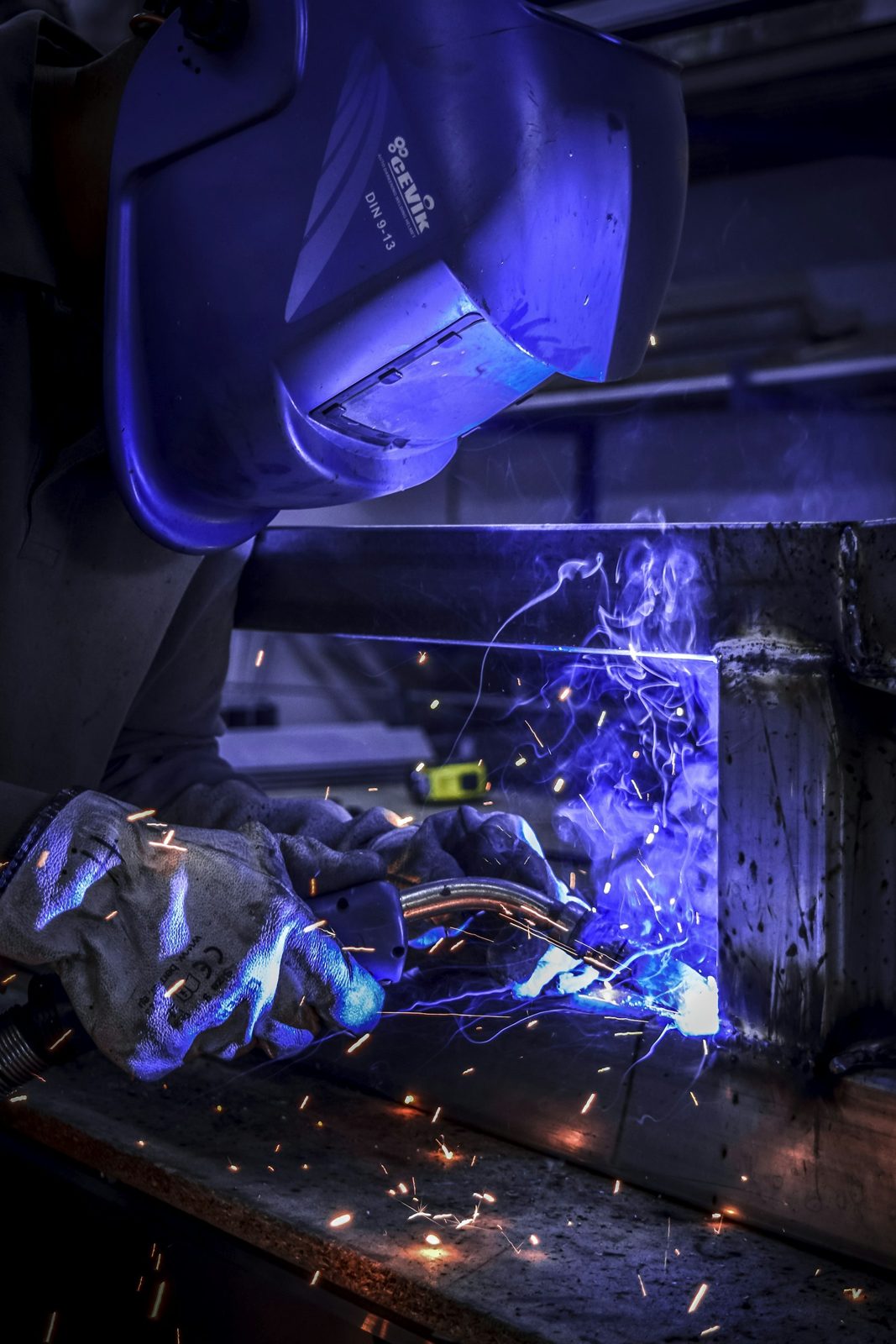
Welding school. One long shop, curtained booths down both walls, metal tables in the middle where you’d chip the slag off and see what you’d actually done. The teacher had a glassed-in office at the front. Stock and scrap at the back.
I was the only woman in the class.
The other guys didn’t talk to me. Not hostile, mostly — they just looked past me, the way you’d look past a fire extinguisher. But there was one, and let’s call him Mike, who could not get over it. A woman in the shop, learning a man’s job.
What really got him was that I could lay a beautiful fillet weld. No undercut. A fine line of carefully placed dimes.
Mike’s fillet welds gave him trouble.
So whenever nobody was looking, he’d say something. Something about women, something about me, something he’d never have said with the teacher in earshot. Sometimes it was worse than talk — a little arrangement of hot metal or a shove near something that could burn me, always deniable, always an accident if anyone asked.
I never complained. Never told the teacher. This was the era it was, and I knew exactly how it would go: I’d be the whiny bitch who couldn’t take it, and every man in that shop would have been proved right about why women don’t belong in a shop.
So I said nothing, and I kept laying my dimes, and I waited.
Voltage
We got to flux core welding.
With flux core, your voltage has to be set just right. Too low and the arc won’t drive down into the joint — you get a weld sitting on top of the metal like icing on a cake, pretty enough to look at and no strength in it at all. Too high and you undercut, chew a groove right out of the parent metal.
What you want is penetration. The weld sinking into the joint and fusing it, all the way through.
Every welder learns to check the dial before they drop the hood. Mike, being Mike, was more of a hood-first man.
His booth was next to mine.
Three Times
I waited until he pulled his curtain.
Then I reached around and turned his dial down.
About thirty seconds later, a stream of language came out of that booth. The curtain flew back, Mike stomped past me with his practice piece, slapped it on the metal table, cursed at it, and carried it up to the glassed-in office.
While he was gone, I reached back in and set the dial to where it should have been.
I heard the teacher tell him to check his voltage and try again.
Mike came back, looked at the dial, found it exactly where it belonged, and gave it a suspicious sort of look — the look you give a door you’re sure you locked. Then he grabbed a couple more practice pieces and pulled his curtain.
I reached in and turned it down.
The expletives arrived right on schedule. Off he went to the office again, and back went the dial to normal.
This time, the teacher walked down and checked the machine himself. Nothing wrong with it. He handed Mike a couple more pieces and told him to try again.
Mike pulled his curtain.
I turned the dial down.
And Mike came out of that booth like a bull out of the chute at a rodeo, in a blue cloud of profanity, and threw his practice piece clear across the shop and hollered:
“I can’t get any penetration! Why can’t I get any penetration?”
I lifted my helmet. Stepped out of my booth. Looked at him.
“Gee,” I said. “It must be really frustrating for a young man like you to not be able to achieve penetration.”
The shop came apart.
Mike stood there in the middle of it while every man in that class laughed at him, and I watched him work out that he had exactly one move available. And he made it. He gave me a rueful little smile.
After class, the guys asked if I wanted to come for a beer.
Mike never bothered me again.
What the Steel Told Me
For a long time, I told that story as a story about Mike. It’s a good one. It’s got a curtain, a rodeo bull, and a punchline that had been sitting in the toolbox the whole time.
But writing it down for you, I noticed it isn’t about Mike at all.
That counsellor gave me his opinion of what I could do. Mike gave me his. Neither of them offered evidence, because neither of them had any — they had a feeling about girls like me, and a confident voice to say it in.
The weld gave me evidence.
You cannot argue with a fillet weld. It’s there, or it isn’t. It’s fused, or it’s sitting on top like icing. You chip off the slag, and the steel tells you the truth in front of anyone who cares to look, and it doesn’t care one bit what you are.
That’s what I actually found out in that shop. Not that I could weld — that was just the thing in front of me that year. What I found out is that I’m the kind of person who goes and finds out. Who’d rather have the evidence than the opinion, even when the evidence is harder to get and when things do not go my way.
I’ve done it my whole life since. Every job on that list is the same reflex. Somebody says you couldn’t, or nobody says anything at all, and I think: well, let’s see.
Nobody told me that about myself. Nobody could have. I had to go and lay the bead.
And here’s the part I didn’t understand until decades later. I had Mike. The whole shop was laughing and I could have kept going, could have finished him — and instead I stopped at one line and let him smile.
I’ve never been sure whether that was kindness or just knowing when a thing is done. Maybe there’s no difference. But it turned out to be more useful than the joke was. The joke ended it. Letting him smile is what got me the beer.
This Week’s Prompts
Pick one. Write the scene, not the summary.
The moment the evidence arrived. You did a thing and it worked, and it told you something about yourself that no one had ever told you. Where were you? What was the thing? Take us there — what did it look like, sound like, feel like when you knew?
The knack you didn’t expect. Something you turned out to be good at that you never trained for, never planned, never saw coming. What was it? How did you find out?
Something you’re good at that’s completely useless. Parallel parking. Knowing every lyric to a song you haven’t heard since 1974. Guessing what’s in a wrapped present. Knowing exactly when the toast is done. What’s yours, and are you unreasonably proud of it?
The quiet one. No achievement, no audience, nobody watching. Just a moment when something in you said oh — this is me, and no one else in the world noticed. What was it?
The one you claimed late. Something true about yourself you didn’t accept until you were well into your life. What kept you from claiming it? What finally let you?
Guidelines for Sharing
One to three paragraphs. One moment, not a life summary. Show us the room.
We witness, we don’t fix. Nobody’s story here needs improving, and none of it needs to be impressive. The quiet ones are often the truest.
If you’d rather not post, write it for yourself. This reflective writing counts either way — the noticing is the work, not the publishing.
Invitation to Engage
Last week I asked what you’d done that nobody gave you permission for.
This week I want the evidence.
What have you done that proves something about you — something you’d never have believed if a person had simply told you, but you couldn’t argue with once you’d done it?
I’d bet you’ve got some. And I’d bet you’ve never counted it.
The comments are open. I’ll be down there.
First published in The Story Harvesters newsletter on Substack, August 10, 2026.
Comments were part of the original newsletter and aren’t included in this archive.