Beginnings
Where Memory Begins
Two Lollipops
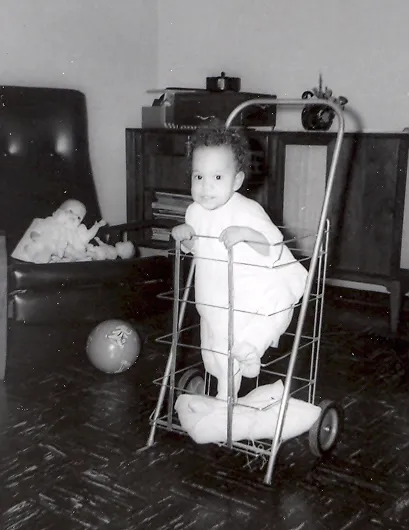
We lived on the 17th floor of a project building in the Bronx, and the elevator always smelled like pee. I was small enough—maybe three or four years old—to stand up in my mother’s pull-behind grocery basket, and every week she’d take me to the store like that, riding along while she walked.
If I behaved during the shopping trip, she’d buy me a lollipop. I always asked for two—one for me and one for Chicken, the little girl who lived down the hall. I can’t remember her real name anymore, but her mama called her Chicken, so I did too.
Chicken had dozens of tiny braids all over her head, each one clipped with a little plastic barrette—white ducks, pink bunnies. I thought she was the most beautiful thing I’d ever seen. I remember standing at her apartment door, holding out that second lollipop, waiting for her to answer. The pride I felt in bringing her something, in thinking of someone else, in being her friend.
That’s one of my earliest memories: standing in that grocery basket, gripping the sides as we rolled through the store, holding two lollipops and thinking about Chicken. It’s the first time I remember being aware that I was a person with my own thoughts and feelings, that I could care about someone outside my immediate family, that I could make choices—even if it was just choosing to share a lollipop.
Funny how memory works. Not the big events, but these small, ordinary moments—they stick because something in us was paying attention. Something in us knew: this matters. Remember this.
What We’re Exploring This Week
This week, we’re reaching back to our earliest conscious memories - those first moments we can touch with certainty when we close our eyes and remember.
Not the stories we’ve been told about ourselves, but the actual memories that belong to us. The moment when we first became aware that we were a person in the world, noticing things, feeling things, storing something away for later.
First memories are strange and powerful things. They’re often not the big moments - not births or moves or momentous occasions - but small, ordinary scenes that somehow got written into us permanently. Standing in a doorway. The smell of something cooking. A face looking down at us. The feeling of being small in a large world.
These memories tell us something about who we were before the world shaped us. They’re the beginning of our conscious story, the place where we started paying attention.
What’s your first memory? What makes it stick when so many other moments have faded? What does it tell you about the person you were becoming?
WHY THIS THEME MATTERS
We all begin—again and again throughout our lives. We begin as children discovering the world. We begin as students, workers, partners, parents. We begin after loss, after failure, after success that redirects everything. We begin when we move to new places, start new chapters, and meet new people who change us. We begin when we finally understand something we’d been circling around for years.
Beginnings are vulnerable moments. We don’t yet know how the story will unfold. We’re uncertain, hopeful, sometimes afraid. But beginnings are also full of possibility—they’re the moments before we know what we’re capable of, before we understand how strong we’ll need to be or how much joy is waiting.
When we share our stories of beginning, something beautiful happens. We recognize each other across time and circumstance. Your first day of school was different from mine, but the nervousness, the newness, the stepping into something unknown—that’s universal. Your decision to begin again after divorce or loss or failure looks different from someone else’s, but the courage it requires? We all understand that.
This month, we’re harvesting stories about beginnings—not to catalog every start we’ve ever made, but to understand how we’ve learned to begin, what beginnings have cost us, what they’ve given us, and how they’ve shaped who we’ve become.
WHAT WE’LL EXPLORE THIS MONTH
Over the next four weeks, we’ll explore beginnings from different angles.
This week (Week 1), we’ll focus on first memories—those earliest moments we can reach back and touch, the start of our conscious awareness. What do you remember from your earliest days? What makes those memories stick when so many others have faded?
Next week (Week 2), we’ll look at starting over—the beginnings that come after endings, the courage of beginning again. When have you had to rebuild, restart, or reinvent yourself? What did that require of you?
In Week 3, we’ll explore moments of recognition—when did you first feel like yourself, like an adult, like you understood something important? Those “oh” moments when awareness shifts and something clicks into place.
And in our final week (Week 4), we’ll consider small beginnings—the tiny seeds that grew into something you never could have predicted. The $25 car that became freedom. The conversation that changed everything. The small yes or no that redirected your life.
Each week, I’ll share prompts to help you harvest your memories, and I hope you’ll share your stories in the comments. This is where the real work happens—not just in the writing, but in the reading, the witnessing, the recognition that we’re all walking similar paths, just in different shoes.
THIS WEEK’S PROMPTS: First Memories
Take some time this week to sit with these questions. Write whatever comes—a paragraph, a page, a fragment. There’s no wrong way to do this.
What’s your earliest memory? Not the story you’ve been told about yourself, but the first moment you actually remember experiencing. What do you see? What do you hear, smell, feel? Who’s there with you? What makes this memory stick when so many others have faded?
A significant “first” that stands out. Your first day of school, your first friend, your first time away from home, your first job. Tell us about a “first” that shaped you. What were you afraid of? What surprised you? What did you learn about yourself or the world in that moment of beginning?
The feeling of being new somewhere. Have you ever been the new kid, the new employee, the outsider walking into a room where everyone else already knows each other? What do you remember about that vulnerability? How did you navigate it? What did it teach you?
A beginning you didn’t recognize at the time. Sometimes we don’t know we’re starting something important until we’re already in the middle of it. Looking back, when did something begin that you didn’t notice in the moment? How did you realize later that everything had changed?
What you were like as a young child. What do your earliest memories tell you about who you were before the world shaped you? Were you bold or careful? Curious or content? What essence of yourself can you trace back to your earliest beginnings?
GUIDELINES FOR SHARING
If you’d like to share your story in the comments, aim for 1-3 paragraphs—you’re not writing a novel, just a snapshot of a memory. Focus on one specific moment or experience rather than generalizations. Show us what you saw, what you felt, what you remember.
If you’re not ready to share publicly yet, that’s completely okay. You can write just for yourself, or simply read and reflect on what others share. There’s no pressure here, only invitation.
Be gentle with yourself. Some first memories are joyful; others carry complexity or pain. All of them are worthy of being remembered and shared.
Remember our community guidelines: We witness, we don’t fix. We honor each other’s experiences without offering unsolicited advice or judgment. What’s shared here is received with respect and care.
INVITATION TO ENGAGE
Remember to share your responses to these prompts in the comments below. I’d love to read them, but if you’re not ready to share yet, that’s okay too. Sometimes we need to write just for ourselves first. Either way, I’m glad you’re here.
Welcome to The Story Harvesters. Welcome to this space where we remember together, where we witness each other’s lives, where we discover that our different stories are really threads in the same human tapestry.
Let’s begin.
First published in The Story Harvesters newsletter on Substack, November 3, 2025.
Comments were part of the original newsletter and aren’t included in this archive.