
Creativity and Expression
The Art You Love
The Doodle Taped to My Monitor
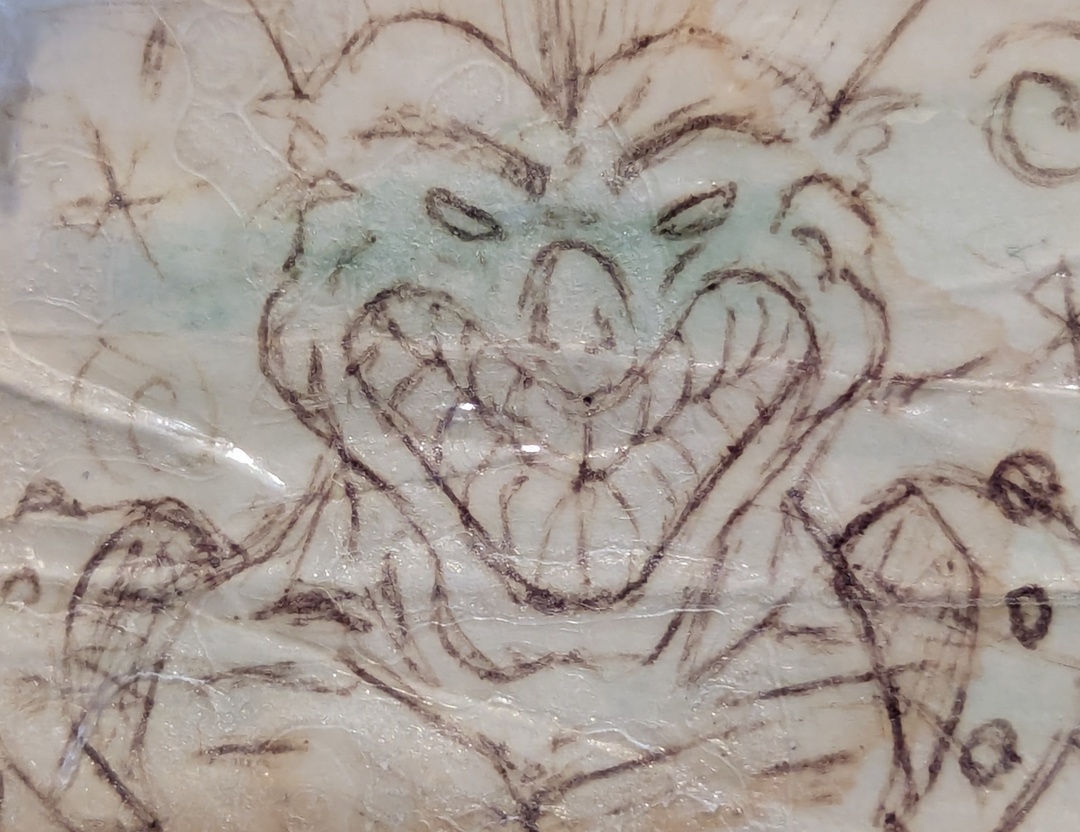
There’s a little drawing taped to my computer monitor. A doodle, really, on a small square of Post-it paper gone soft and yellow at the edges. I’ve covered it over with tape to protect it, because the paper is nearly thirty years old now and I am not prepared to lose it.
It has been taped to every monitor I’ve owned since. New computer, new screen, and the very first thing that goes on it is that doodle. It has outlasted more machines than I can count.
My son drew it. He was a little boy, waiting in my office one evening while I finished up for the day, and he doodled it to pass the time and handed it to me.
I’ll tell you at the end of this what I see when I look at it. First I want to talk about why we keep things like this.
What Makes Art Successful
I’ve been in rooms with famous paintings. I’ve stood in front of works that people cross oceans to see.
And I want to say something that might sound like heresy: the doodle on my monitor moves me more than most of them.
Here’s what I’ve come to believe, and it’s the whole of what I know about art. Art — in every form it takes — should make you feel something. That’s the test. Not whether it’s skilled, not whether it’s valuable, not whether the right people have declared it important.
Does it make you feel?
By that measure, a thirty-year-old Post-it doodle outranks half the Louvre. It’s not a fair fight. The Louvre has technique on its side. The doodle has a little boy on mine.
The Soundtrack of a Life
Once you start looking at art this way — as the thing that makes you feel — you find it everywhere. It stops being something that hangs on a wall in a building with an admission fee and starts being something woven throughout an ordinary life.
Music, for one. I believe we all carry the soundtrack of our lives. A few bars of the right song and you’re not in your kitchen anymore — you’re seventeen, somewhere you haven’t been in decades, feeling something you’d forgotten you could feel. The song didn’t change. You did, by a lifetime. But it kept the feeling for you, right where you left it, and handed it straight back.
Sometimes the art you love comes to the table on a plate. A holiday meal, laid out with care — the dishes arranged just so, the smell of fire-roasted vegetables filling the house. And suddenly you’re a child again, jumping into a pile of fallen leaves, because somehow the cook has captured an entire autumn and served it for dinner.
Sometimes it’s a hobby horse my ex-husband made for our daughter, by hand, a long time ago. The marriage didn’t last. The horse did — and so did the love that went into the making of it. That’s the strange grace of a made thing. It holds what it was given, long after everything around it has changed.
None of that hangs in a gallery. All of it is art. Every piece of it makes somebody feel.
Three Generations on My Wall
In my home, my grandchild’s art hangs on the walls. Right next to my own artistic attempts, which are — let’s be honest — the efforts of an enthusiastic amateur.
My son’s child made those pieces. Bold colours, fearless lines, the total confidence of someone who has not yet been told they might not be any good at this. I hang them with real pride, next to my own, and I don’t rank them. They belong together.
Is any of it worthy of a museum?
Probably not. And I could not care less. Because every piece on that wall makes me feel something — pride, tenderness, the particular ache of watching a child grow up in fast-forward — and by the only measure I trust, that makes all of it a success.
Three generations of art nobody would call important, and I wouldn’t trade the wall for a Rembrandt.
What I See When I Look at the Doodle
So. The Post-it.
When I look at that little drawing, I don’t see a doodle. I see a small boy who loved to draw. A boy who made up fanciful stories, who had a rich and funny imagination, who sat in my office one ordinary evening and made something and gave it to his mother.
That boy is grown now. But he’s still in that square of paper, thirty years on, every time I glance up from my work.
That’s what the art you love actually does. It isn’t really about the drawing, or the song, or the meal, or the horse. Those are just the keel. What they carry — what they hold across all those years — is a feeling, and a person, and a moment you were not willing to let go of.
And here’s the thing I can’t stop noticing, one month before we finish this year together. That’s exactly what we’ve been doing here, every single week. We tape the doodle to the monitor. We write the story down. Same instinct, different tools. We are all just trying to keep a feeling somewhere we can get back to it.
The Post-it does it with crayon. We’re learning to do it with words.
This Week’s Prompts
Pick one. Take us to it.
The art you’d run back into a burning house for. Not the most valuable thing you own — the one that makes you feel the most. What is it? Who made it? What happens in you when you look at it?
Your soundtrack. A song that isn’t just a song. Where does it take you the instant it starts? Who’s there? What can you smell and see and feel when it plays?
Art you made yourself. However humble. A drawing, a birdhouse, a quilt, a garden, a meal. You don’t have to think it’s good. Do you love it anyway? Why?
A meal as art. A dish or a table that was about far more than food. Who cooked it? What did it hold? What does the smell of it bring back?
The made thing that outlasted. Something someone made by hand that’s still with you, long after the maker or the moment has gone. What is it? What does it still carry?
Guidelines for Sharing
One piece of art you love. One to three paragraphs. Tell us what it is, and — more importantly — tell us what it makes you feel.
There’s no wrong answer here, and nothing is too humble. A child’s drawing counts. A pop song counts. Your grandmother’s pie counts. If it makes you feel something, it belongs in this conversation, and so do you.
We witness, we don’t fix. If someone shares the art they love, we receive it as the tender thing it is.
If you’d rather keep it to yourself, keep it. The remembering is the gift, whether or not it’s ever read.
Invitation to Engage
What’s your doodle on the monitor?
The thing that would mean nothing to a stranger and everything to you. The song, the drawing, the recipe, the handmade thing you’d never part with. The art that isn’t worth anything and is worth everything.
Tell me what it is. And tell me who you see when you look at it.
The comments are open. I’ll be down there.
First published in The Story Harvesters newsletter on Substack, September 21, 2026.
Comments were part of the original newsletter and aren’t included in this archive.