
Creativity and Expression
Finding Your Voice
Speak Your Mind Even If Your Voice Shakes
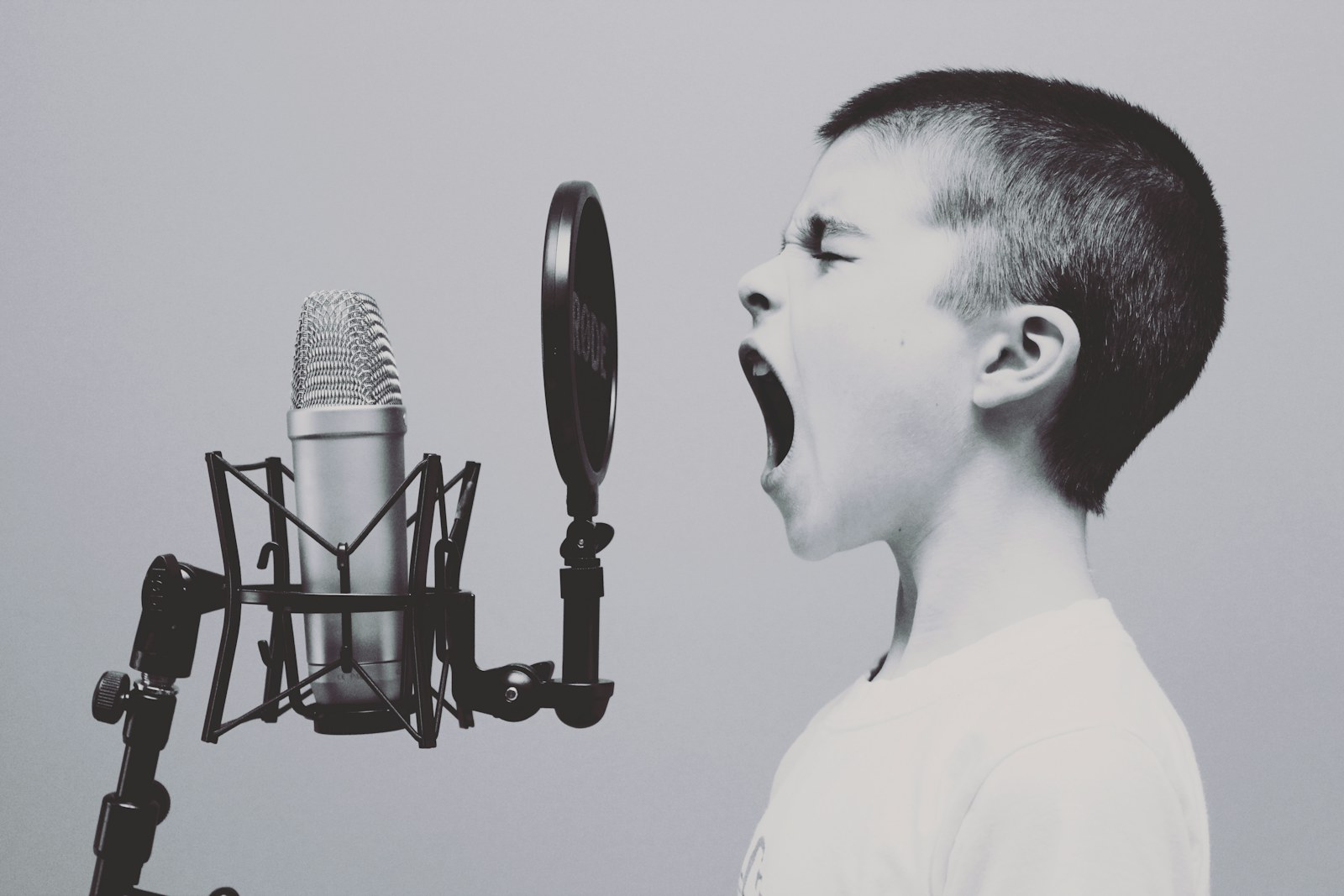
Last month, I wrote about building a lathe table and about the confidence that comes from making something solid and useful with your hands.
But there’s another kind of making that’s harder than any of it. Harder than welding, harder than figuring out a machine I’d never seen.
Saying the true thing out loud. To someone’s face. When you know it won’t go well.
I’ve built tables. I’ve laid welds. I’ve hauled a rig across a province. And I still find that saying one honest, uncomfortable sentence to another person — and letting it land — is one of the hardest things I ever do.
This week is about that. Finding your voice and using it, even when it shakes.
A Confession First
I should tell you something. I hate confrontation.
I’m a Libra, if you put stock in that sort of thing, and I’m the picture of it — I want everyone comfortable, I want the peace kept, I want to leave a room feeling like nobody’s upset with me. Given the choice between saying the hard thing and letting it slide, every cell in my body votes to let it slide.
So when I tell you the next story, I need you to understand it wasn’t in my nature. It went against the grain of who I am. That’s exactly why it matters to me.
Speak Your Mind Even If Your Voice Shakes
A few years back, during Pride week, some friends and I went down to the festivities downtown.
One of the emcees was a local radio personality — a talk-show host, someone with a public voice in that city.
A drag performer had just done a number in a beautiful pink suit, sixties style, with a little pink pillbox hat. When she finished, the radio host said the look reminded her of Jackie Kennedy. The other emcee, joking, said he didn’t know Jackie was Black.
And the radio host said, “Well, I don’t see colour.”
A friend of mine there that day — a woman of colour — turned to me. Had I heard that? Had it bothered me as much as it had bothered her?
It had.
We sat with it for a minute. We talked about the peculiar exhaustion of the well-intentioned — the people who mean no harm and do it anyway — and we half-joked that maybe educating them should be left to someone younger, someone who still had the idealism for it.
And then I watched the next performer and couldn’t let it go.
Walking Up
Here’s what I kept thinking. This woman had a public voice. She stood up in front of her whole community with a microphone. And she’d said, out loud, that she didn’t see people like my friend. Didn’t see people like me.
She seemed like such a lovely person, yet I don’t think she had the faintest idea what those words do to the person on the other end of them.
And I thought: she should. Someone in her position should know how that lands.
So — almost not of my own will, my body moving before my nerve had fully signed off on it — I got up and walked over to her.
I introduced myself. I shook her hand. And I said, “I heard you say that you don’t see colour.”
She smiled and nodded, like I’d paid her a compliment.
Then, as kindly as I knew how, working hard to keep my voice from shaking, I said, “I suppose that means you don’t see people who look like me.”
How It Went
I’ll spare you the whole exchange.
It went badly. Fast.
She reacted as though I’d accused her of something monstrous — as if I’d said she burned crosses on lawns, rather than that a kind-sounding phrase had erased me. And then she said the thing I’ve never forgotten: that racism only still exists because people like me won’t let it go.
There it was. I was the problem. Not the erasing — the noticing. If I’d only stop pointing at the wound, it would heal.
Whatever door might have been open for half a second slammed shut.
All I could do was turn away, sad, and go back to my seat.
I remember thinking, walking back: it’s always the well-intentioned. The ones who’d be horrified to be called unkind are so often the ones who, when you gently show them the effect of their words, come out swinging hard enough to end the conversation for good.
I thought: I’m getting too old for this.
What I Know Now
I could leave the story there. It’s honest, and it’s where the day actually ended — no triumph, no breakthrough, just a defensive stranger and a tired woman walking back to her chair.
But I’ve had a few years to sit with it, and here’s what I’ve landed on.
I didn’t change her mind. I probably made her defensive for the rest of the night. By every measure of winning, I lost.
And I would do it again.
Because the alternative was to let “I don’t see you” hang there in the air, said into a microphone, unanswered. And I’ve spent enough of my life on the receiving end of that particular kindness to know that silence would have cost me more than the confrontation did.
There’s a particular tiredness in being told you’re the reason a wound won’t close by the very person who just reopened it. That’s a big part of why the well-intentioned are so much harder to talk to than the openly unkind — you go in gently, and somehow you come out the villain. I understand now why my friend and I half-joked about leaving it to someone younger. Some days you simply don’t have another one of those conversations in you.
But that’s the thing I’ve come to believe about finding your voice. It isn’t about winning. It’s almost never about winning. It’s about no longer being willing to sit quietly while something untrue about you goes unchallenged — even when your voice shakes, even when it changes nothing, even when you walk away sad.
You don’t speak up because it works. You speak up because staying silent has a price, and one day you decide you’re done paying it.
I still hate confrontation. I’m still a Libra. My voice still shakes.
I do it anyway now. That took me most of a lifetime to learn.
This Week’s Prompts
Pick one. Tell us the moment.
The time you spoke up. You said the hard, true thing out loud, to someone’s face, at some risk. What was it? What did it cost? How did it go — and would you do it again?
The time you didn’t. The words you swallowed. The thing you wish you’d said and didn’t. What stopped you? What would you say now, if you had the moment back?
Your voice, shaking. A time you did the brave thing while frightened — not fearless, but scared and doing it anyway. Where were you? What did it take to get the words out?
Finding the words late. Something true about yourself you couldn’t say out loud until well into your life. What kept it in? What finally let it out?
The lighter one. A time you finally said the small thing you’d been biting back — sent the food back, corrected the mispronounced name, told them you actually hated the restaurant everyone kept choosing. Small, but yours. What was it?
Guidelines for Sharing
One moment. One to three paragraphs. The scene, not the summary.
And a gentle word, because this week’s prompts can go to tender places: there is no shame in the times we stayed silent. Most of us have a long list of things we wish we’d said. Silence is a survival skill before it’s ever a regret, and we learned it for good reasons. If you write about a time you didn’t speak, you’re not confessing a failure — you’re witnessing your own life honestly. That’s the whole work here.
We witness, we don’t fix. That goes for the versions of ourselves who couldn’t find the words, too.
If you’d rather keep it private, keep it private. This writing counts either way.
Invitation to Engage
When did you find your voice?
Or — because this is just as true, and just as worth telling — when did you lose your nerve, and wish ever after that you hadn’t?
Both are part of it. The speaking and the swallowing. I’ve done plenty of both, and I’m not sure the silent moments haven’t taught me more than the brave ones.
Tell me about a time your voice shook.
The comments are open. I’ll be down there.
First published in The Story Harvesters newsletter on Substack, September 14, 2026.
Comments were part of the original newsletter and aren’t included in this archive.