
Creativity and Expression
What You Make: An Invitation to Remember
The Lathe Table
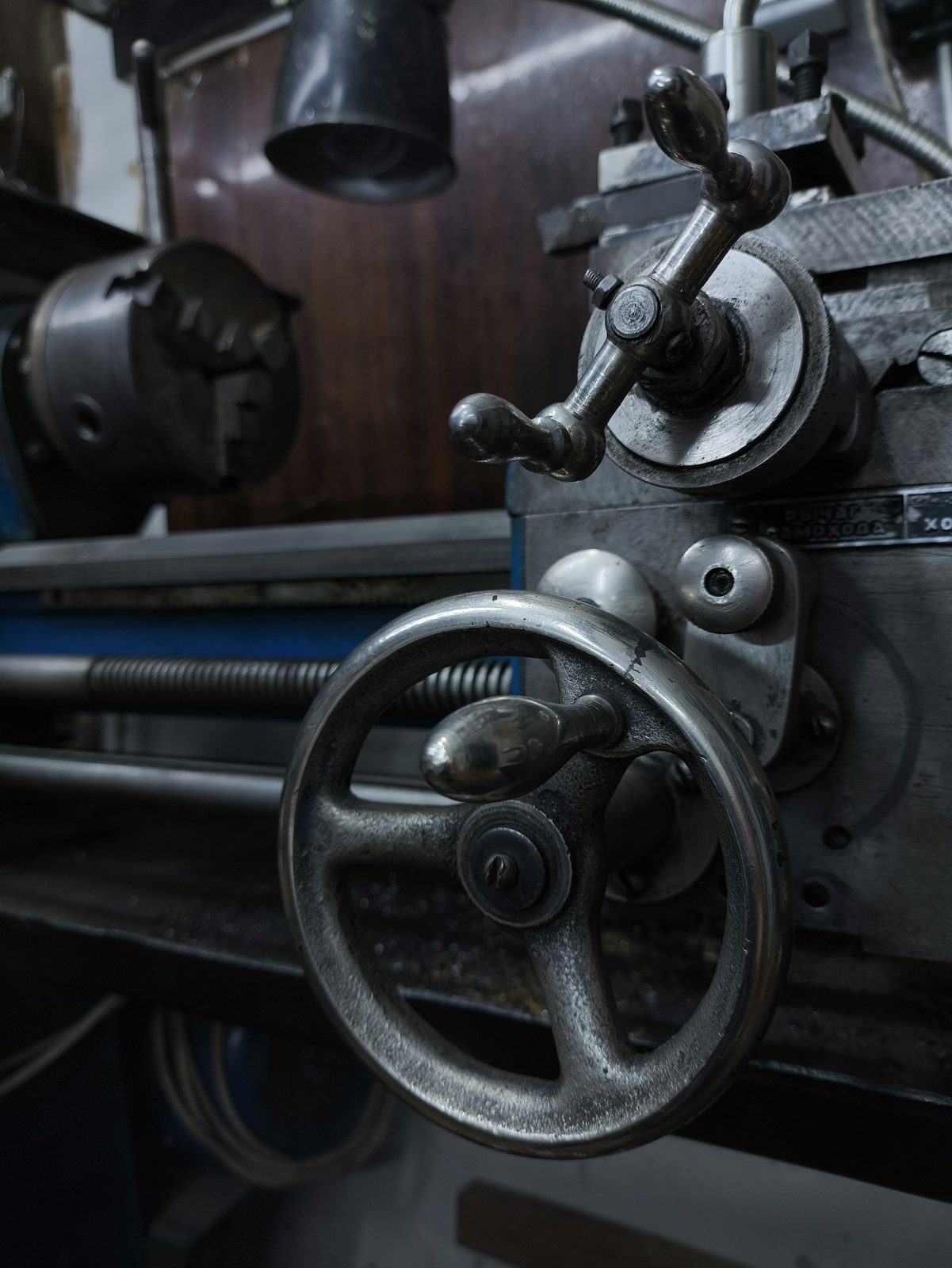
Last month I spent four weeks telling you about a welding shop, and I made it sound like a battlefield — the only woman in the class, the men who ignored me, the one who didn’t.
But something else happened in that shop, and it had nothing to do with any of them.
One day, the teacher pulled me aside and asked me to build a table for the shop lathe.
I’d never seen a lathe before in my life.
What I Did With That
I could have said so. I’ve never seen one; I wouldn’t know where to start. That would have been the honest, sensible thing, and nobody would have thought less of me for it.
Instead, I went and looked at it.
I watched how it ran. Watched what it did, where the weight sat, how it shook when it was working, and where all that force wanted to go. I took measurements — the footprint, the height a person would need to work at it comfortably, the load it would have to carry without so much as a shiver.
Then I drew it. A design, and then proper plans, on paper, with the measurements marked.
Then I chose my materials. This part mattered more than it sounds. A lathe table that flexes is worse than no table at all, so every piece had to be right — heavy enough, square enough, strong enough to stand there holding a working machine for years and never give.
And then I built it.
Standing Back
When it was done, I stood back and looked at it.
I want to try to tell you what that felt like, because it’s the whole reason I’m writing this post.
It was just a lathe table. A steel table for a machine, in a school shop, that maybe a few dozen people would ever use. Nobody was going to hang it in a gallery. Nobody would ever know I’d made it.
But I had never built anything like it in my life. I’d started with “ I’ve never seen one of those and finished with a solid, useful thing standing on the shop floor, and the teacher looked at it and was impressed.
For the first time in my life, I felt the particular satisfaction of standing back and seeing something I made — something I hadn’t known I could make — and feeling proud of it.
It wasn’t really about the table. The table was just where I found out something about myself: that I could be handed a thing I’d never done, and instead of backing away from it, I could take its measure, figure it out, and build something that would last.
That’s a kind of confidence I didn’t know I had until I was standing there looking at it.
Why This Theme Matters
This month we’re talking about what we make. And I want to get one thing out of the way right at the start, because I think it stops a lot of people before they begin.
You might be reading the word creativity and thinking it’s not about you. That it’s a word for other people — artists, musicians, the ones who paint or write or play something. That you’re not creative, you just… get things done.
I’d like to gently take that word back for us.
A lathe table is not art. Nobody would call it that. But I had to see how something worked, imagine a thing that didn’t exist yet, plan it, choose for it, and make it real, solid and useful. If that’s not creativity, I don’t know what we’re calling creativity.
And once you look at it that way, the whole world of making opens up. The person who builds a deck. Who fixes an engine everyone else gave up on. Who grows tomatoes from seed. Who sews, cans, wires a basement, restores a chair, gets a pie crust to come out flaky every single time. Who takes a chaotic garage and turns it into a place where everything has its spot.
All of that is making. All of it starts the same way mine did — with a problem, or a blank space, or a thing that doesn’t exist yet, and a person willing to say let me figure this out.
We make things because it’s one of the deepest ways we say I was here. And because there’s nothing quite like standing back and seeing a useful, enduring thing that wasn’t in the world until you put it there.
What We’ll Explore This Month
Over the next four weeks, we’re looking at creativity and expression from four angles.
This week, what you make — the things you build, grow, fix, cook, solve, bring into being.
Next week, finding your voice — expression of a different kind. The times you said something true, out loud, even when it was hard. Even when your voice shook.
In Week 3, the art you love — the work of other people’s hands and hearts that has mattered in your life. The things others made that you carry with you.
And in Week 4, your legacy of making — the useful, enduring things you’ll leave behind, and what it means to have added something to the world that will outlast you.
This Week’s Prompts
Pick one. Take us through it, step by step.
Something you built. A thing you made with your hands that you were proud of. Walk us through it — not just the finished thing, but how you got there. Where did you start? What did you have to figure out?
Something you fixed. The engine, the lamp, the relationship between two warring parts of a machine. What was broken? How did you work it out? What did it feel like when it finally worked?
Something you grew. A garden, a plant, a crop, a single tomato that tasted like summer. What did it take? What did you learn about patience, or weather, or yourself?
A problem you solved that felt like making. Not with your hands — with your mind. A system you built, a mess you organized, a knot you untangled that everyone else had given up on. Making isn’t only physical.
The useless-but-proud one. The thing you make that nobody would call impressive and you’re quietly delighted by anyway. The perfectly packed cooler. The grocery list organized by aisle. The sandwich nobody else can make right. What’s yours?
Guidelines for Sharing
One thing you made. One to three paragraphs. Walk us through it if you can — the starting point, the figuring-out, the standing back.
And remember: this isn’t a competition, and it was never about being impressive. The lathe table wasn’t impressive. It mattered because of what it taught the person who built it. Your made thing is the same. We witness, we don’t fix.
If you’d rather write it just for yourself, please do. The remembering is the work, whether or not anyone else ever reads it.
Invitation to Engage
So — what have you made?
Not what you think counts as creative. What you actually made — built, grew, fixed, cooked, solved, brought into being. The thing you stood back and looked at and felt something about.
I’d love to know what it was, and I’d love to know what you found out about yourself in the making of it. Because I don’t think I’m the only one who discovered they were more capable than they’d believed, standing in front of something they’d just built.
The comments are open. I’ll be down there.
Welcome to Month 11.
First published in The Story Harvesters newsletter on Substack, September 7, 2026.
Comments were part of the original newsletter and aren’t included in this archive.